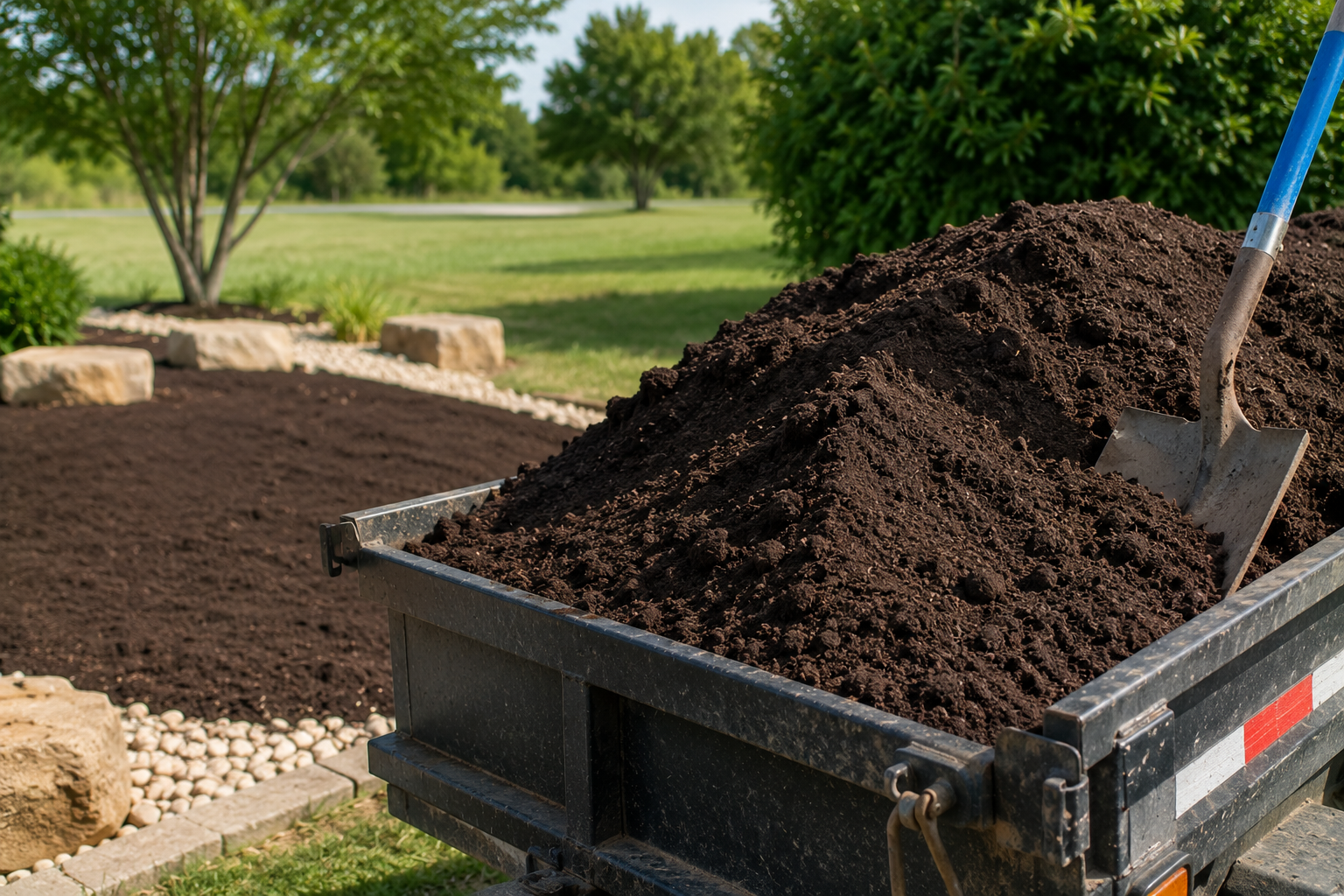
Whether you are starting a lawn, refreshing a garden bed, building raised beds, or improving a planting area, estimating the right amount of topsoil helps you order more confidently. This guide shows Central Texas homeowners and contractors how to convert project measurements into cubic yards before arranging topsoil pickup or delivery.
Why Estimating Topsoil Quantity Matters
Before embarking on any landscaping project, accurately estimating the amount of topsoil you need is crucial. Ordering too much can lead to unnecessary waste and increased costs, while ordering too little can cause project delays and additional delivery fees. By calculating your topsoil needs in advance, you can ensure a smooth and cost-effective project.
Understanding Cubic Feet and Cubic Yards
When calculating topsoil, it's important to understand the difference between cubic feet and cubic yards. A cubic foot is a three-dimensional space measuring 1 foot by 1 foot by 1 foot. In contrast, a cubic yard is a larger volume, equivalent to 27 cubic feet. This conversion is essential when estimating how much topsoil you need for your project.
Basic Calculation for Topsoil Needs
First, measure the length and width of the area in feet. Convert your planned soil depth from inches to feet by dividing the number of inches by 12. Then use this formula: Length (ft) × Width (ft) × Depth (ft) ÷ 27 = Cubic yards needed For example, a 10-foot-by-5-foot garden bed with 12 inches of topsoil needs: 10 × 5 × 1 ÷ 27 = 1.85 cubic yards For a 6-inch depth, use 0.5 feet. For a 3-inch depth, use 0.25 feet. Round up when appropriate, especially when working with uneven ground or settling.
Example Calculations for Common Projects
Garden Beds
For a typical garden bed, you might need a depth of 6 inches of topsoil. If your bed is 10 feet by 4 feet, the calculation would be 10 x 4 x 0.5 = 20 cubic feet, or about 0.74 cubic yards.
Lawn Top-Dressing
For lawn top-dressing, a thin layer of about 1/4 inch may be used. For a 1,000-square-foot lawn, a 1/4-inch layer requires approximately 20.8 cubic feet, or about 0.77 cubic yards. Site conditions, grass type, and lawn goals can affect the appropriate approach, so call if you need help selecting a material.
New Lawns
For a new lawn, a 4- to 6-inch soil layer may be considered depending on the project plan and existing site conditions. For a 1,000-square-foot area at 6 inches deep, you would need approximately 18.5 cubic yards of soil. Calculate it as: 1,000 × 0.5 ÷ 27 = 18.52 cubic yards.
Raised Beds
For raised beds, a depth of 12 inches is common. A 4-foot by 8-foot bed would require 32 cubic feet, or about 1.2 cubic yards.
Filling Low Spots and Light Grading
For filling low spots or light grading, the depth can vary significantly. It's best to measure the average depth needed across the area to get an accurate estimate.
How Depth Affects Topsoil Needs
The depth of topsoil required can significantly impact the total amount needed. While a deeper layer provides more nutrients and better growing conditions, it also increases the volume of soil required. Always consider the specific needs of your project and the existing site conditions when determining depth.
Common Soil Options in Central Texas
The best material depends on whether the project is for planting, lawn establishment, drainage, or changing grade.
- Screened topsoil: Commonly used for lawn establishment, garden beds, raised beds, and flower beds.
- Sandy loam: A blend of sand and loam that drains well and is often considered for lawns, gardens, planting beds, and soil amendment.
- Organic compost or garden mix: Used to add organic matter to planting areas and garden beds.
- Fill dirt: Unscreened native material used for grading, leveling, low-spot fill, backfill, and raising elevation—not typically the first choice for planting areas.
Practical Ordering Tips
- Measure the project area twice and use the average depth for uneven areas.
- Convert inches to feet before calculating cubic feet and cubic yards.
- Round up when the site has dips, slopes, or loose soil that may settle.
- Confirm that the delivery truck can safely access the unloading area.
- Call before ordering to verify current inventory, receive a quote, and discuss the quantity needed.
Cheaper Than Dirt Landscape Supply offers pickup and delivery from its Belton Yard & Waco Yard.
Order Topsoil in Central Texas
Once you have an estimated cubic-yard total, Cheaper Than Dirt Landscape Supply can help you confirm the appropriate material, current availability, pickup options, and delivery details. Call 254-534-5279 to request a quote and arrange topsoil pickup or delivery.
Ready to order? Call us.
Confirm inventory, get a quote, and schedule same-day delivery or pickup.